
THE OLD CITY
Moss Removal in Victoria
Victoria's heritage rooflines are complicated rather than large. Valleys, dormers and turrets collect growth, and narrow lots decide how we reach any of it.

What's included
What you get
Every visit covers the same ground, whatever the property.
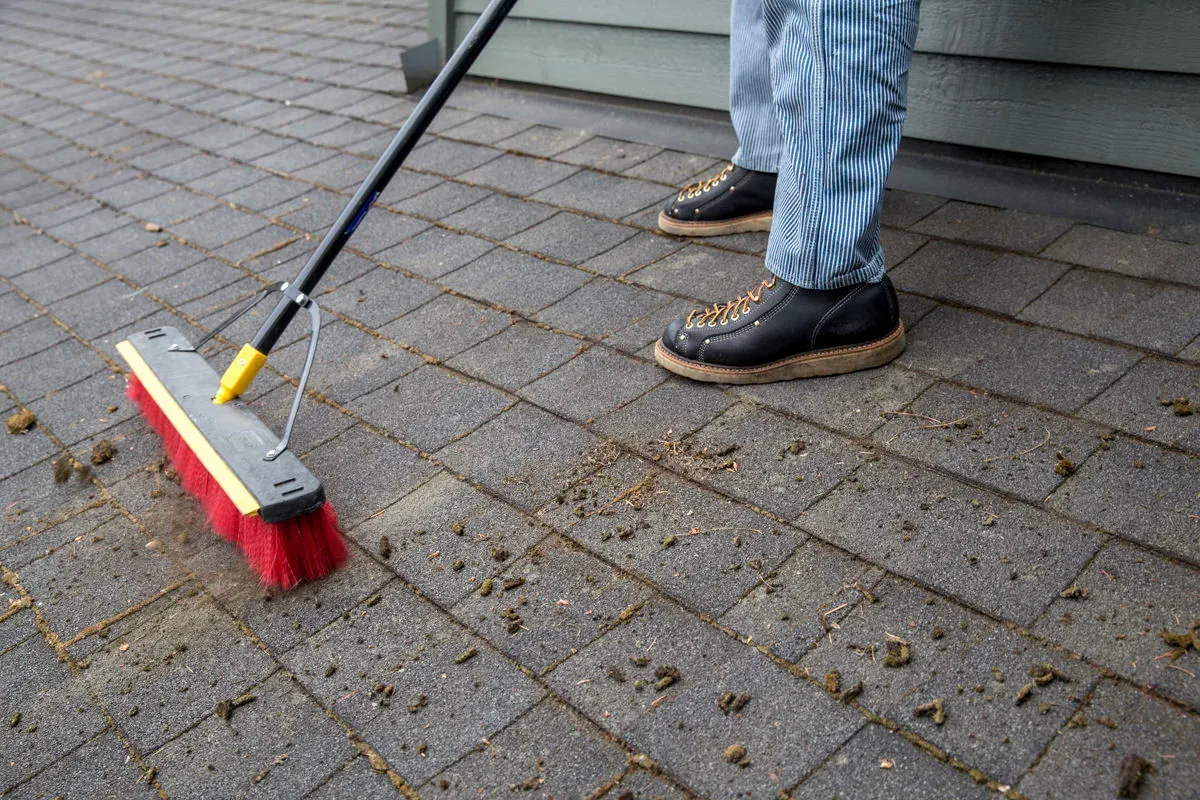
- Growth lifted off by hand and brushed clear, worked down-slope so nothing packs under the courses
- Valleys, hips and the shaded lower courses checked, not just the faces you can see from the road
- Debris cleared off the roof and taken away, and kept out of the gutters and drains on the way down
- Care taken around what is planted underneath, and around anything on the roof that should not get wet
- A plain account of the covering’s condition, with no obligation attached
- Houses, character homes, townhouse rows, strata blocks and commercial roofs
Victoria roofs are rarely big. They are complicated, which is a different problem and usually a longer one.
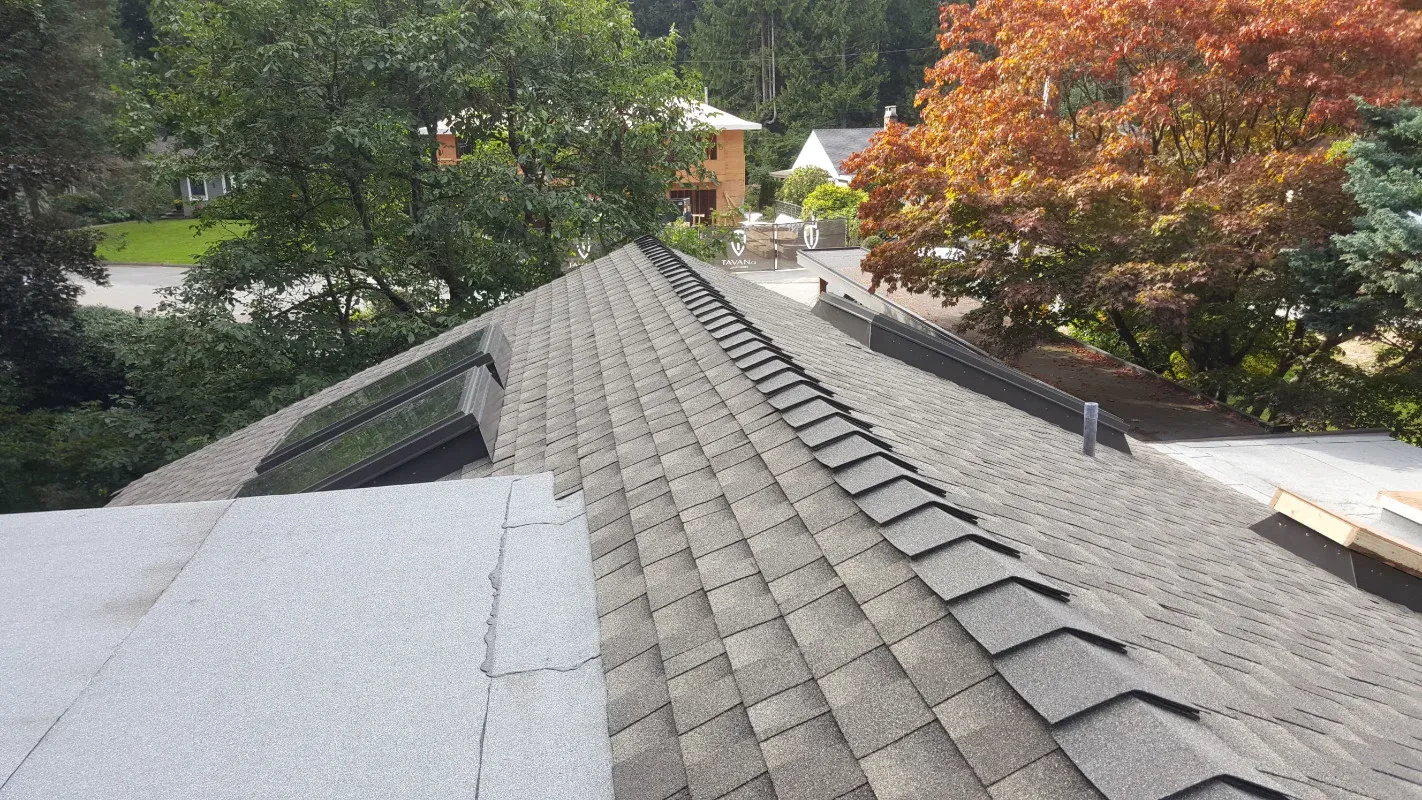
The heritage stock through Fairfield, James Bay, Fernwood and Rockland was built with steep pitches, gables facing several directions, dormers cut into the slopes, and in places turrets and bays with their own small roofs. That gives a house of modest footprint five or six roof planes, and every junction between two planes is a valley collecting water and growth from both.
Add a mature street canopy — Garry oak through Fairfield and Rockland, big maples over Fernwood — and you have shade sitting on complexity. That combination is why a Victoria roof can take longer than a Saanich roof twice its size.
Valleys are where the work is
On a simple gable roof, a valley is a detail. On a heritage roofline it is the whole story.
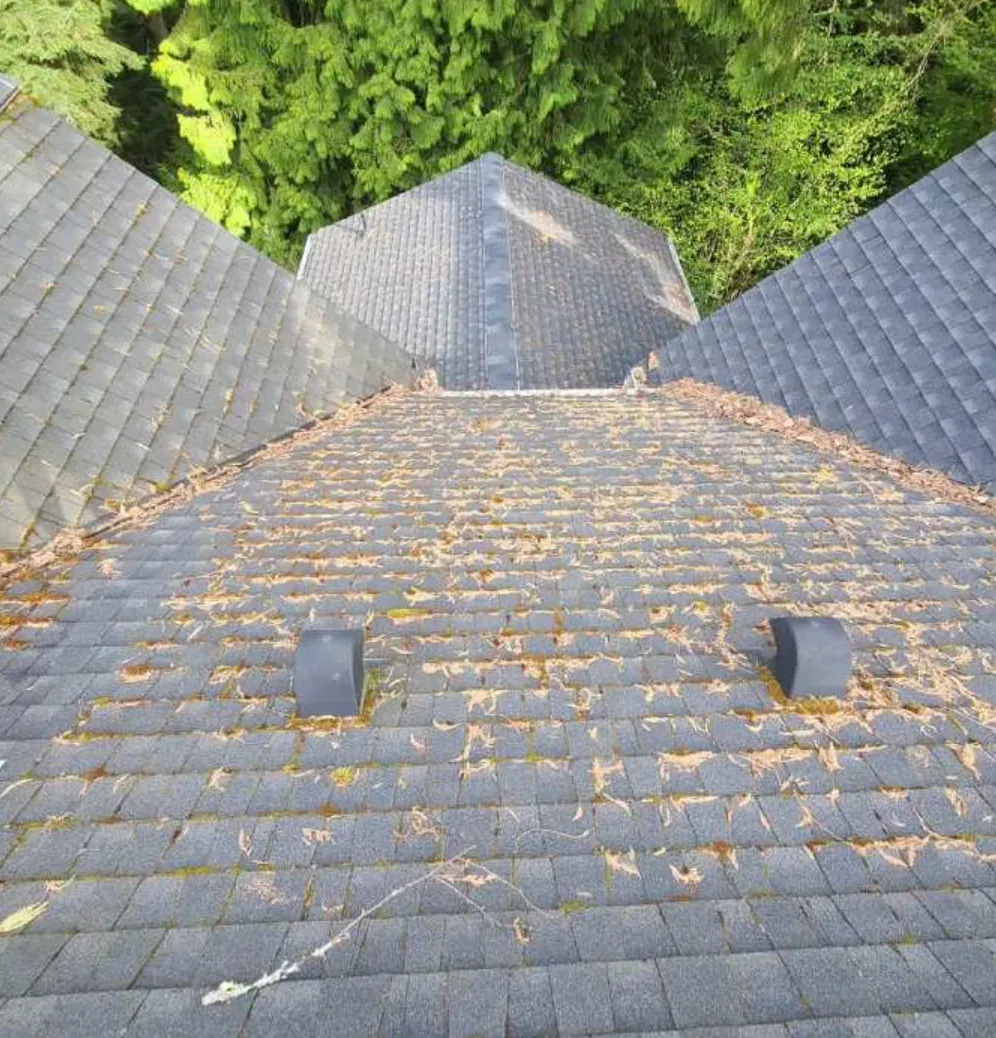
Water off two slopes is funnelled into one channel, and everything that water is carrying goes with it: needles, oak litter, grit off the shingles. That material settles at the narrow point, holds moisture, and becomes the first place growth establishes. From there it spreads up both slopes.
Clearing the faces of a house like this and leaving the valleys is close to pointless work — the roof looks better from the street for a season and reseeds itself from the junctions. So the valleys, hips and the flashing lines around dormers get done first and get most of the time.
The lot decides the day
Older Victoria lots were laid out when properties looked different. Today a great many of them have no side access wide enough to walk a ladder through, a fence or a neighbour’s wall within a metre of the house, or a front garden dropping steeply to the street.
That does not stop the work, but it changes how it gets done and how long it takes, and it is the single biggest variable in a Victoria estimate. It is also the reason a phone quote without seeing the property is a guess. A photo of the side of the house is worth more than the square footage.
Cedar and painted trim
Cedar shake turns up on plenty of character homes here, and a shake roof that has been on since the eighties is softer than it looks. It is hand work through the keyways, taken slowly, and it stays looking like a weathered cedar roof afterwards. Anything that comes back looking new has had something taken off it that was doing a job.
The other thing these houses have is painted wood everywhere — bargeboards, brackets, porch trim, deep sills. Growth in those joints holds water against the paint film, and once the film has gone the wood behind it goes quickly. It is a short addition while the ladder is up and it saves a lot of repainting.
Where we draw the line
Some heritage roofs should not be walked. Old cedar at the end of its life, slate, and anything brittle enough that the visit would cost you more than the growth is. Where that is the case we will tell you, rather than doing the reachable edge and calling it done.
Free estimate, Monday to Friday, insured and WCB-registered.
Also working across Saanich, around Uptown and in Gordon Head.
How it works
How a Moss Visit Runs
Four steps, and the roof is ours from the moment the ladder goes up. You tell us what you are looking at, we price the roof in front of us, and you hear what we found before we leave.
Tell us what you can see
Your address, the roof covering if you know it, and which slopes have gone green.
A photo from the driveway is worth more than a description. North side, shaded by a big fir, growth thick enough to see from the road — that tells us most of what we need before we arrive.
We price the roof itself
Cedar, asphalt and concrete tile are three different jobs, and the quote reflects which one yours is.
Covering, pitch, height, how far the growth has spread and what stands under the eaves all move the figure. You have it before anything is booked.
The growth comes off carefully
Moss is lifted and brushed off the surface, not driven off with pressure.
We work down the slope so nothing is pushed under the courses, keep the run of water in mind the whole time, and take care around whatever is planted below.
You hear what the roof told us
Standing on a roof shows you things the lawn never will.
A course lifting at the edge, a valley holding damp long after the rest has dried, granules already thin where the growth was heaviest. You get that plainly, with nothing attached to it.
Four steps, and the green is gone.
- You send the address and a photo.
- We send back a price for your roof.
- The growth comes off.
- You know what shape the roof is in.
Send the form or call for a free, no-obligation estimate.
Got questions?
Moss removal in Victoria — questions
Can you work on heritage roofs?
Yes, and they are the ones that take the most planning. Steep pitches, multiple valleys, dormers and turrets mean a lot of edges and a lot of places to work carefully. The roof is rarely large; it is almost always complicated.
There is no side access to my lot. Is that a problem?
It is common in James Bay and Fairfield and it is worked around rather than charged as a surprise. It does change the approach and the time, which is why we would rather see the lot or a photo before quoting.
What about cedar shake on an older house?
Plenty of it here, and a cedar roof of that age is softer than it looks. It is slow hand work through the keyways, and a properly cleared cedar roof still looks like an old cedar roof afterwards.
Are the valleys really the important part?
On a heritage roofline, more than anywhere. A house with five or six roof planes has water from all of them concentrated into a handful of valleys, and packed growth there does more harm than growth on any face.
Do you do the trim and window frames as well?
Yes, and on character homes there is a lot of it — bargeboards, brackets, sills and porch trim, all painted wood in shade. Growth in those joints holds water against the paint film. It is a short addition while the ladder is up.
Customer reviews
What customers say
“They are efficient, hardworking, and reliable. I’ll definitely call them again for other services. Highly recommended!”
“Great customer service, and they came quickly..will be using again for sure”
Moss removal in Victoria
Tell us the address and send a photo of the shaded side, and we will get you a price.