
UNDERFOOT
Driveway and Sidewalk Moss Removal
Moss on paving is a footing problem before it is a tidiness problem. We clear driveways, paths, patios and steps, and get it out of the joints, not just off the top.
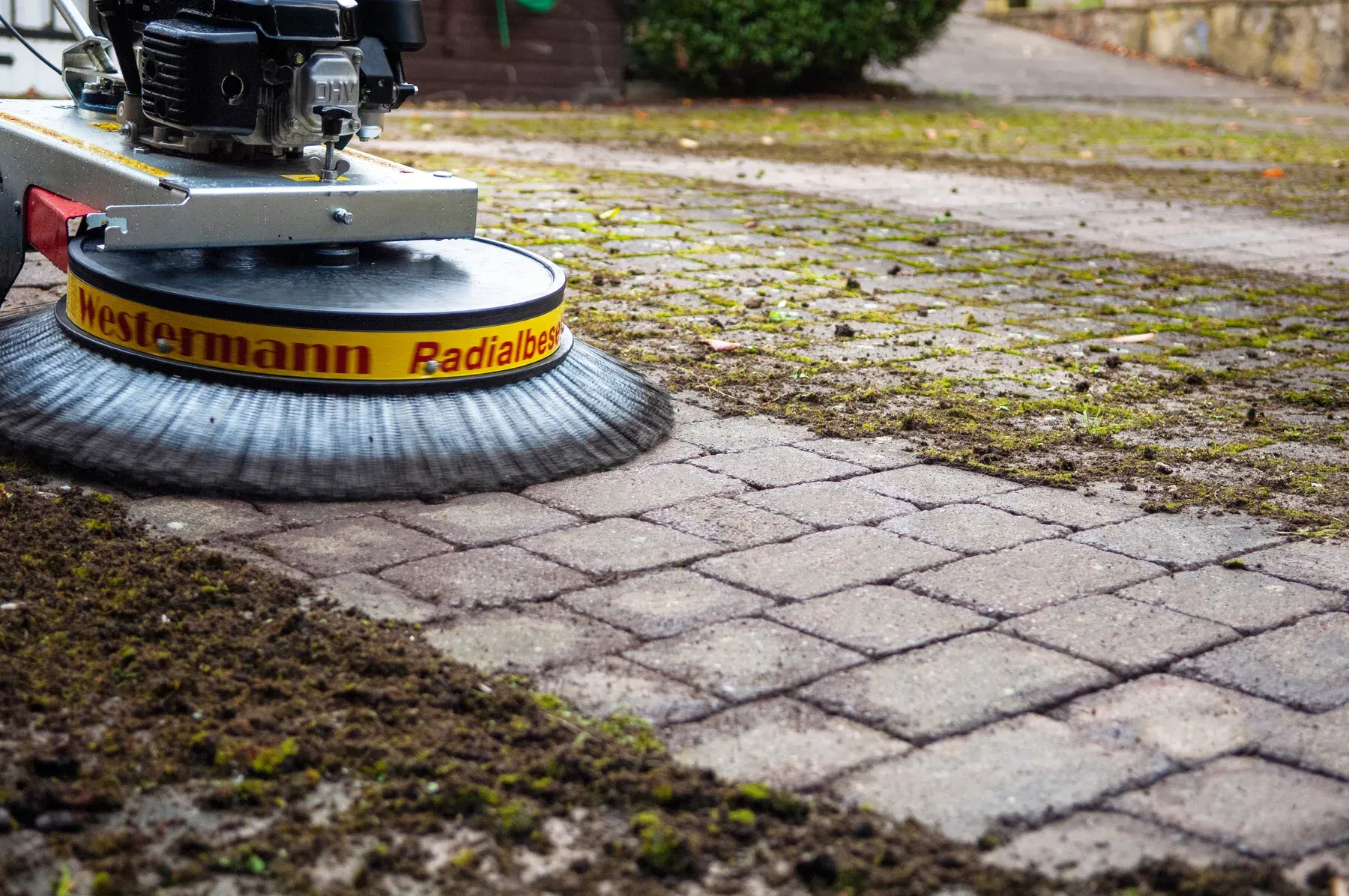
Moss on a driveway is a different problem from moss on a roof, and it is worth separating the two. On a roof the concern is water held against a covering that cost thousands to install. On paving the concern is much simpler: a wet moss surface on a slope has almost no grip, and the person who discovers that is usually carrying groceries.
Saanich has a lot of the conditions that cause it. Shaded lots under fir and oak, older concrete with a rough surface for growth to key into, aggregate driveways that hold damp along the low edge, and a wet stretch from October to March that keeps it all going.
Where it actually grows
Almost never in the middle of an open driveway. Growth on paving follows shade and standing water, which means it shows up along the same handful of places on nearly every property.
The shaded edge, where a fence, a hedge or the house itself keeps the sun off all winter. The low corner, where water sits after rain rather than running off. The joints between pavers and the seams in poured concrete, which stay damp long after the surface has dried. The bottom two or three steps of a flight, which are usually the shadiest and always the ones people are moving fastest on.
Knowing that changes how the job is priced and how long it takes. A driveway that looks half covered from the road is often twenty minutes of surface and an hour of joints.
Pressure is the right tool here
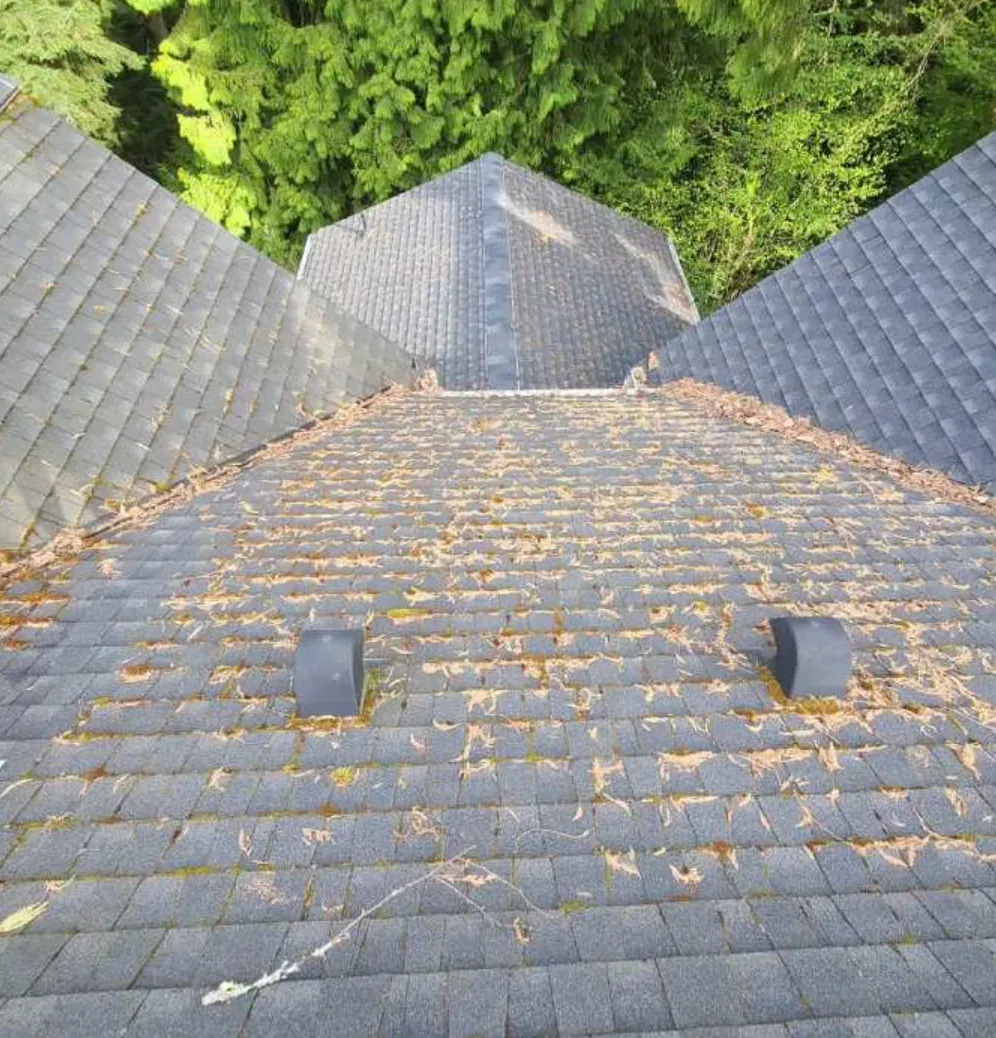
This is the one part of the work where the answer is the opposite of the roof answer. A concrete driveway is a hard, homogeneous surface with nothing laid over the top of it, and pressure is what shifts growth out of a rough concrete surface properly.
That said, it still gets matched to what is underfoot. Older poured concrete with exposed aggregate, soft brick, some flagstone and anything with a sealed or coloured finish will not take what a modern concrete paver will. The setting comes down, the angle changes, and on the softest surfaces the work goes back to being done by hand.
The other thing pressure does on paving is empty the joints. Packed growth between pavers usually comes out along with a fair amount of the jointing sand that was holding everything in place. That is normal and it is fixable, but it is worth knowing in advance — which is why we say it before we start rather than after.
Steps, and the reason to book at all
If a property gets only one part of this done, it should be the steps and the path to the door.
Concrete stairs down a sloped Saanich lot, stone treads through a garden, a walkway along the shaded north side of the house — those are where moss turns into an actual footing hazard, and they are usually the surfaces getting the least attention because they are round the side or behind a hedge.
They are also quick. Steps and a front path on their own are a short visit, and plenty of people book exactly that and leave the driveway for another year.
Where it goes afterwards
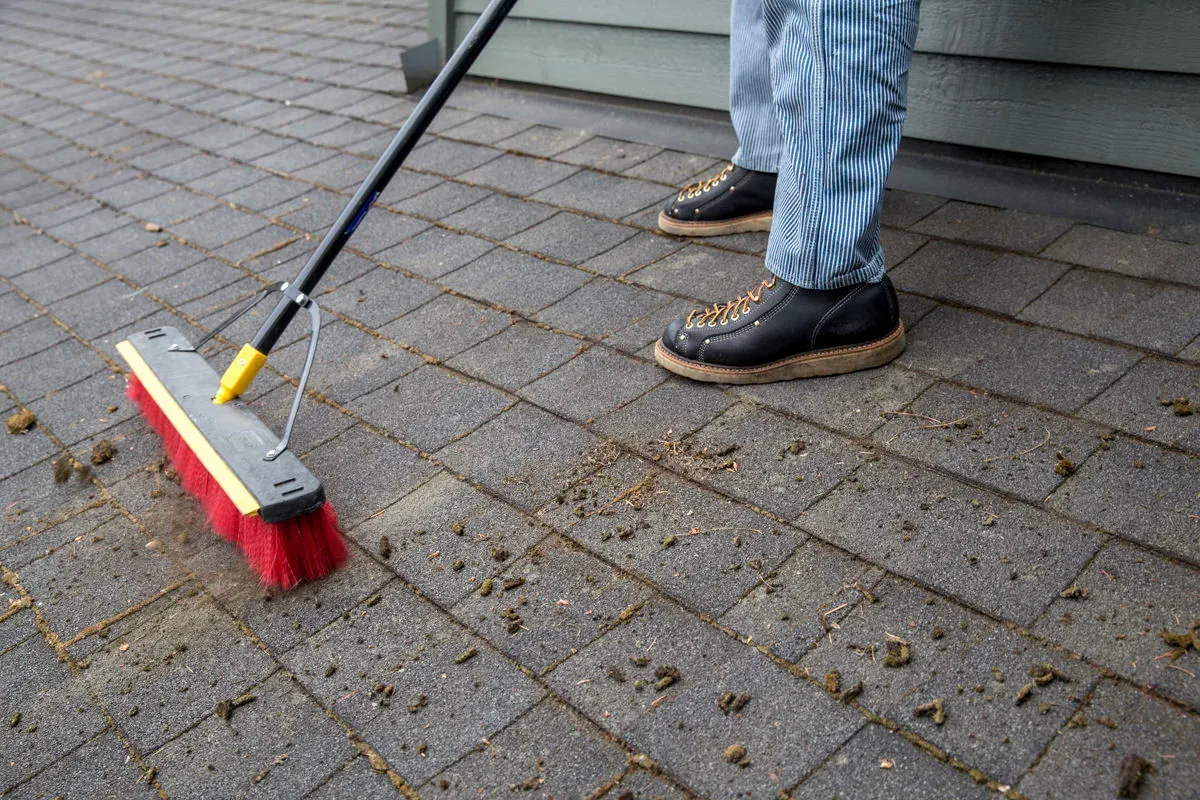
Growth cleared off paving comes away with us rather than getting rinsed into a bed or down the nearest drain. A storm drain is not a disposal point, and a garden bed is just a slower way of putting the same material back where it came from.
We also keep the water off anything that should not have it — vents, low windows, the base of a wall with siding on it, and whatever is planted along the edge of the run.
What we will tell you
Mostly whether it is worth doing again, and when. A driveway in full sun on an open lot may not want touching for years. A north-side path under a cedar hedge will be green again inside two winters no matter what anyone does to it, and the honest advice there is often about the hedge rather than the path.
Free estimate, Monday to Friday, and we are insured and WCB-registered.
If the roof above it has gone green as well, that is roof moss removal, and treatment to slow the return is covered under moss treatment and prevention.
How it works
How a Moss Visit Runs
Four steps, and the roof is ours from the moment the ladder goes up. You tell us what you are looking at, we price the roof in front of us, and you hear what we found before we leave.
Tell us what you can see
Your address, the roof covering if you know it, and which slopes have gone green.
A photo from the driveway is worth more than a description. North side, shaded by a big fir, growth thick enough to see from the road — that tells us most of what we need before we arrive.
We price the roof itself
Cedar, asphalt and concrete tile are three different jobs, and the quote reflects which one yours is.
Covering, pitch, height, how far the growth has spread and what stands under the eaves all move the figure. You have it before anything is booked.
The growth comes off carefully
Moss is lifted and brushed off the surface, not driven off with pressure.
We work down the slope so nothing is pushed under the courses, keep the run of water in mind the whole time, and take care around whatever is planted below.
You hear what the roof told us
Standing on a roof shows you things the lawn never will.
A course lifting at the edge, a valley holding damp long after the rest has dried, granules already thin where the growth was heaviest. You get that plainly, with nothing attached to it.
Four steps, and the green is gone.
- You send the address and a photo.
- We send back a price for your roof.
- The growth comes off.
- You know what shape the roof is in.
Send the form or call for a free, no-obligation estimate.
Customer reviews
What customers say
“The service provided by the owners of the company and the staff were beyond exceptional. The price was also very exceptable and affordable.”
“Amazing! Sent in a request form on their website in the morning, heard back that afternoon, and booked for the next day. Very fast, reliable, and efficient.”
Got questions?
Driveway & Sidewalk Moss — questions
Why is moss on a driveway worth dealing with?
Grip. Wet moss on a sloped concrete driveway or a set of stone steps has almost none, and the people who find that out are usually carrying something or wearing the wrong shoes. Everything else about it is cosmetic; that part is not.
Can you pressure wash paving?
On concrete and most paving, yes — this is the one place where pressure is the right tool rather than the wrong one. It is still matched to the surface: old concrete, soft brick and some flagstone will not take what a modern paver will.
Will the moss come out of the joints between pavers?
That is where most of it lives, so yes, and it takes longer than the surface does. Be aware that clearing packed joints often takes some of the jointing sand with it, and the paving may want re-sanding afterwards. We will tell you before we start, not after.
Does it grow back quickly?
On a shaded, north-facing path, yes — usually within a year or two. On an open driveway that gets afternoon sun, considerably longer. Shade is the whole story on paving, the same as it is on a roof.
Can you do the steps and not the whole driveway?
Yes. Steps and the path to the front door are the parts that matter most for footing, and plenty of people have just those done. It is a smaller job and it gets priced as one.
What about moss on a wooden deck?
Decking is softer and takes a gentler approach than concrete does, and a deck with growth on it usually has a drainage or airflow problem underneath worth mentioning. Tell us what it is built from and we will tell you what we would do with it.
Do you clear the moss away or leave it?
It leaves with us. Moss scraped off a driveway and rinsed into a garden bed or a storm drain has only moved a few metres, and in the case of the drain it has moved somewhere worse.
Driveway & Sidewalk Moss in Victoria and the surrounding area
Tell us the address and we will get you a price.