
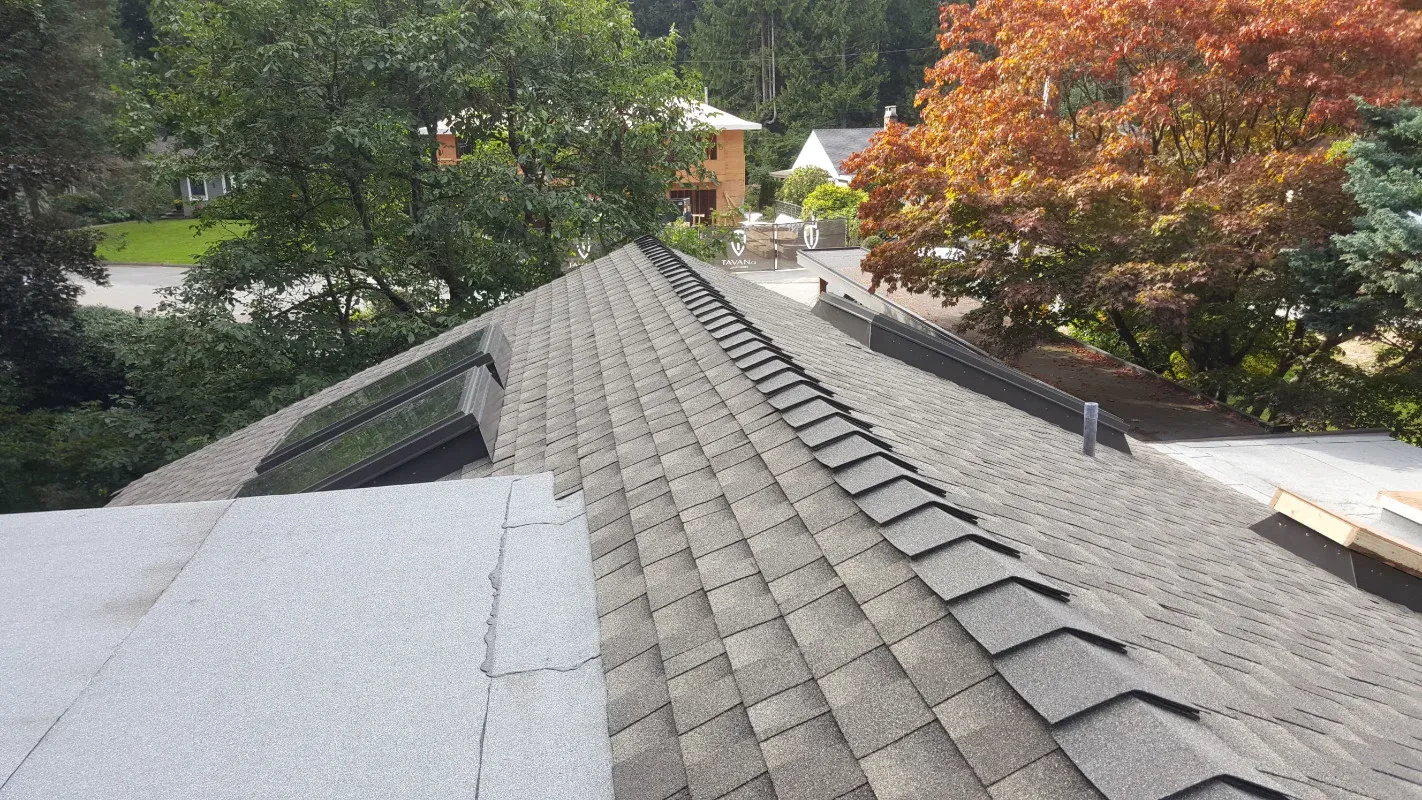
CEDAR ROOFS
Cedar Shake Moss Removal
Cedar holds growth in the keyways and softens as it ages. This is slow hand work, and a cedar roof cleared properly still looks like an old cedar roof.
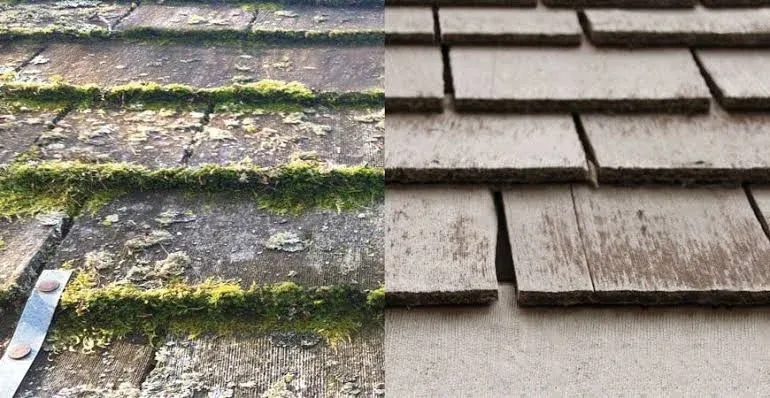
Cedar is the covering that most rewards patience, and the one where a fast method does the most damage. A shake roof on this part of the Island is often twenty or thirty years old, has been wet for eight months of every one of those years, and is considerably softer than it looks from the driveway.
The keyways are the job
Growth on a cedar roof is not really on the shakes. It is between them.
The keyway — the gap between two shakes in a course — is narrow, shaded from every angle and slow to dry. Moss establishes there first and spreads out from it, and by the time it is visible across the face of the roof the keyways have been full for years. A roof cleaned across the surface and not through the keyways looks finished from the ground and is essentially untouched where it matters.
Clearing them is slow. It is done by hand, along the run, working down the slope so nothing is driven up under the course above. There is no version of this that a machine does faster without doing it worse.
What age does to a shake
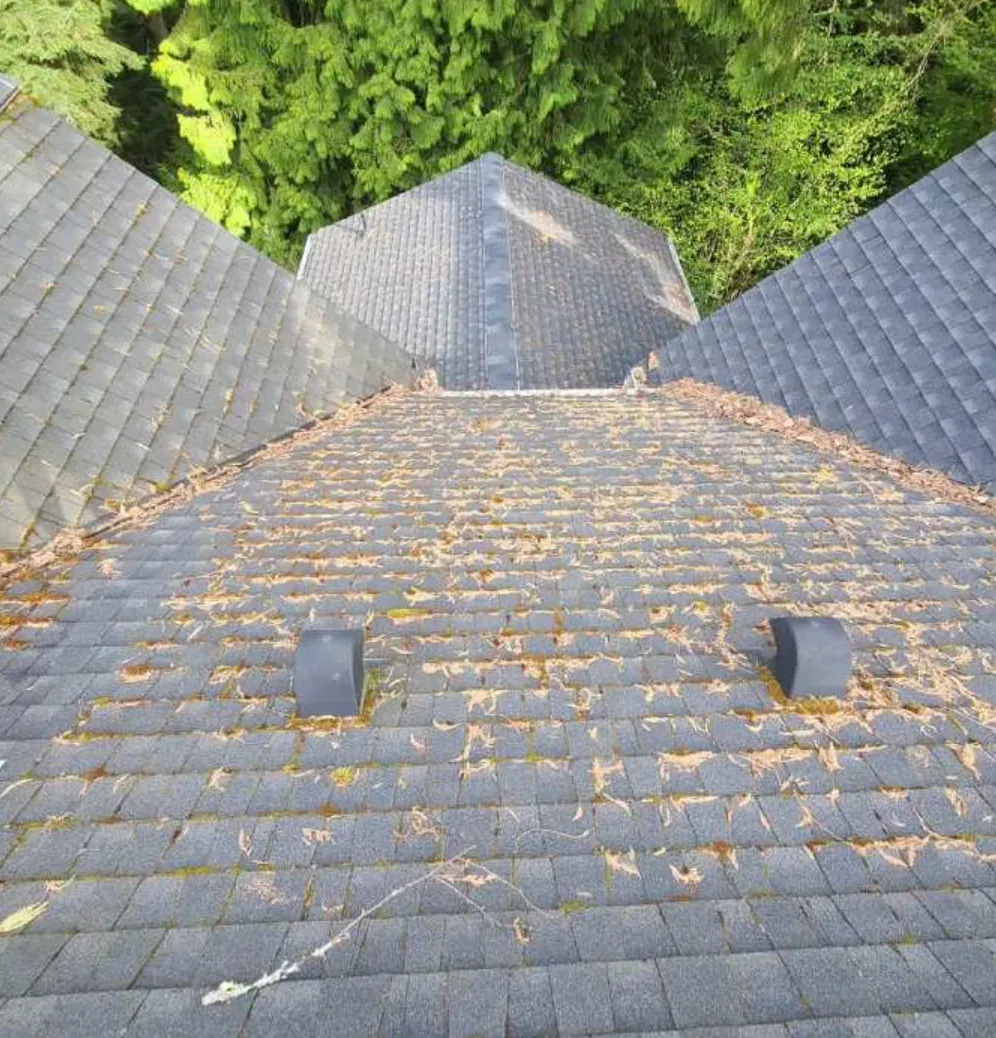
A weathered cedar shake has a grey, slightly fibrous surface that is doing real work — it sheds water and takes the UV. Under it is wood that has been damp for most of its life.
That combination sets the limits. Pressure lifts the weathered layer and exposes soft wood underneath, which then holds more water than it did before anyone touched it. A stiff blade dragged across the grain does something similar on a smaller scale. So the tools stay soft, the direction stays with the grain and down the slope, and the pace stays slow.
The butt line — the bottom edge of each course — is where cedar gives out first, and it is the part that has been sitting wettest. That is where we start, and it is the part we look at hardest on the way through.
What gets flagged
Loose shakes. Cupped shakes that have curled away from the course below. Splits running up from the butt. Any patch where the roof has already been repaired with something that is not cedar.
None of that is ours to fix, and none of it gets quietly worked around either. A shake that lifts under a hand is one that was coming off in the next southeaster anyway, and you are better off knowing which slope it was on.
Why cedar rots from the bottom up
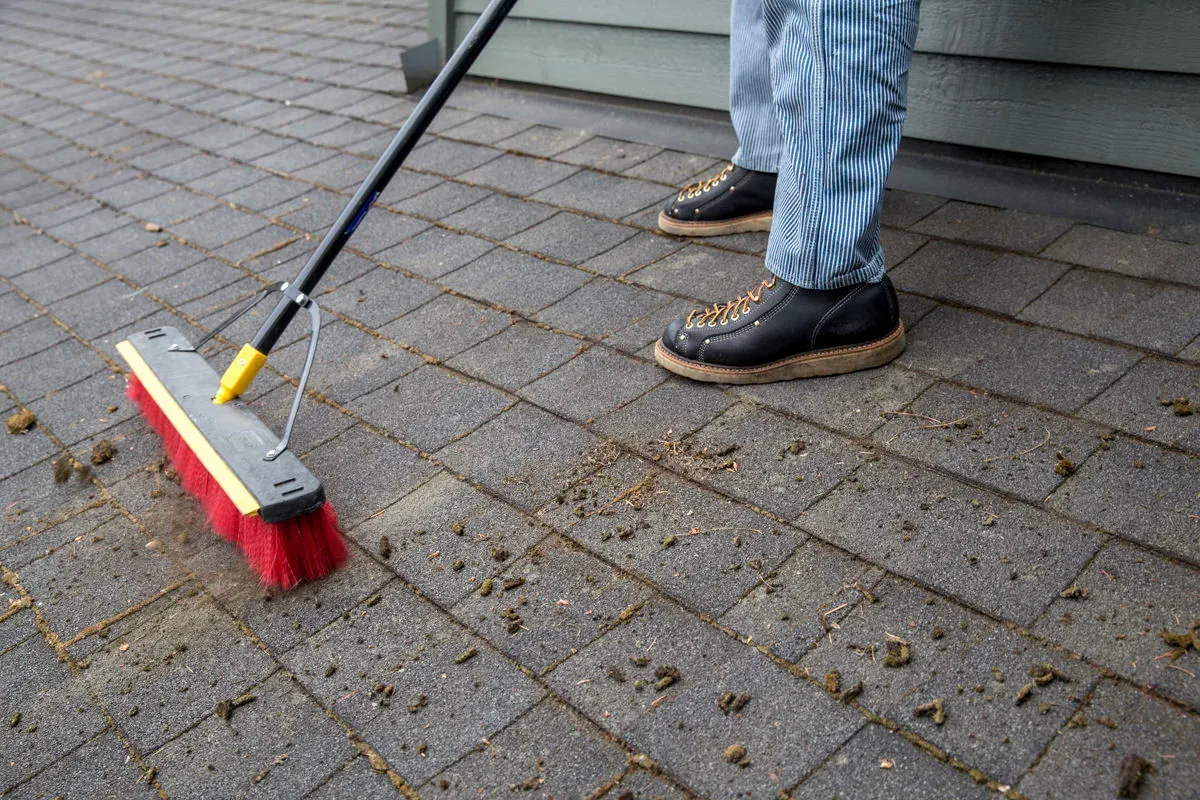
Water leaves a shake roof by running down the face of each shake and dripping clear at the butt. That butt edge is end grain, which takes up water far faster than the face does, and it is the part sitting closest to whatever is growing in the keyway below it.
So cedar tends to fail along the butt lines first, in a fairly even band across a slope, rather than in patches the way asphalt does. A shake that has gone soft there will feel spongy under a thumb while the top two-thirds of the same shake is still sound.
That is worth knowing when you are deciding whether a roof is worth clearing. A cedar roof with sound butts has years in it. One that is soft along the butt line across most of a slope is telling you something the moss is not responsible for.
What you get afterwards
The keyways clear, the butt lines clear, the valleys and hips done properly, and the growth off the roof and away rather than raked into the gutter. Then a plain account of what the roof is doing: which slopes are worst, where the shakes are going soft, and roughly how long before it wants looking at again.
Shaded cedar under fir tends to want attention every two or three years here. Open cedar goes longer.
Different covering? See asphalt shingle or concrete tile.
Got questions?
Cedar Shake — questions
Will cleaning shorten the life of my cedar roof?
Done by hand, no. What shortens it is growth left in the keyways holding water against end grain, or a cleaning method aggressive enough to strip the weathered surface that is doing the shedding. Cedar is the covering where method matters most.
Should a cedar roof look new afterwards?
No, and be wary of anyone promising it will. A cedar roof that has weathered for twenty years is grey, textured and uneven, and that surface is doing a job. Cleared of growth it looks like a tidy old cedar roof, not a new one.
What if some shakes are already loose?
We stop and tell you. Loose, cupped or split shakes get flagged rather than quietly worked around, because a shake that lifts under a hand today comes off in a storm regardless of who was on the roof.
Is cedar more expensive to do than shingle?
Usually, because it takes longer. The keyways are all hand work and there is more of it per square metre than an asphalt slope. The estimate reflects the roof rather than the footprint.
Should the roof be treated afterwards?
On cedar it is worth discussing rather than assuming. A shake roof relies on drying out between rains, and anything that sits on the surface is worth thinking about carefully. We will say what we would do on yours and price it separately.
Can moss be left on a cedar roof that is near the end anyway?
Sometimes that is the honest answer. If the shakes are thin at the butts, splitting and lifting across whole slopes, clearing the growth tidies the roof without adding years to it. We would rather tell you that than take the work.
Customer reviews
What customers say
“They do a great job and provide great customer service! They are always reliable. Thank you,”
“Great experience working with this company! Quick turn around time and very professional. I’ll definitely be using their services again in the future.”
Cedar Shake in Victoria and the surrounding area
Tell us the address and we will get you a price.